Published Saturday, January 28, 2006
 We have all looked up to the sky and most times seen this white puffy cloud speeding or moving slowly over the sky which varies in shape and size from time We have all looked up to the sky and most times seen this white puffy cloud speeding or moving slowly over the sky which varies in shape and size from time to time. Sometimes clouds seem to cover the most of the sky, at other times it may scattered all over the sky, other times you may just see a single cloud moving over the vast blue sky and sometime to time. Sometimes clouds seem to cover the most of the sky, at other times it may scattered all over the sky, other times you may just see a single cloud moving over the vast blue sky and sometime s they are no where to be found in the sky - leaving the blue sky spotless. Clouds can tell us to some extent how a day is going to turn out. Some of us even look to the clouds to s they are no where to be found in the sky - leaving the blue sky spotless. Clouds can tell us to some extent how a day is going to turn out. Some of us even look to the clouds to see if their are any clues on any weather condition that may cause rainfall or a storm. So, we have all seen a cloud and can even describe its'appearance but have you ever wondered what clouds are and how they are formed? Well, if you are in search for an answer then this weeks' article will therefore answer this question. Ponder or wonder no more! In some future article we will look on the different types of cloud , the naming of clouds and there classification. see if their are any clues on any weather condition that may cause rainfall or a storm. So, we have all seen a cloud and can even describe its'appearance but have you ever wondered what clouds are and how they are formed? Well, if you are in search for an answer then this weeks' article will therefore answer this question. Ponder or wonder no more! In some future article we will look on the different types of cloud , the naming of clouds and there classification.
What are clouds?
 A cloud is a visible accumulation of very tiny water droplets or solid ice crystals that float in the air (troposphere). Clouds are usually white in appearance due to the fact that it reflects (scatter) all the visible wavelengths of light from the sun. However, clouds can also appear dark in appearance A cloud is a visible accumulation of very tiny water droplets or solid ice crystals that float in the air (troposphere). Clouds are usually white in appearance due to the fact that it reflects (scatter) all the visible wavelengths of light from the sun. However, clouds can also appear dark in appearance taking on the color grey or black. This will depend on the amount of sunlight passing through it, in relation to the thickness of the cloud. clouds are always in motion and changing shape which is caused by the wind and warmer air (dryer air) as water is lost to the surrounding air. taking on the color grey or black. This will depend on the amount of sunlight passing through it, in relation to the thickness of the cloud. clouds are always in motion and changing shape which is caused by the wind and warmer air (dryer air) as water is lost to the surrounding air.
How are clouds formed
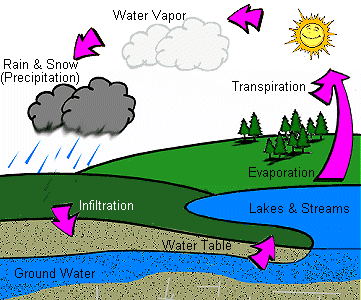
Water can be found in three forms or in the three States of Matter: solid (ice), liquid (water) and gas ( water vapor). When the Sun shines on the Earth the light energy (solar heat) from the Sun causes the temperature in the atmosphere, as well as on the surface of the earth to rise, causing water from plants (transpiration) and from the surface of earth such as the soil, ponds, lakes, and sea to rise (evaporation) into the sky as an invisible water vapor. As air rises (by convection) it expands and the water vapor moves upward in the atmosphere while the temperature and the pressure of the air (atmospheric pressure) decreases. When this happens, the air gets colder to the point where it cannot hold as much water vapor (saturation point) as it would in warmer air. This will result in some of the excess water vapor to condense and form water droplets or ice, while some will form on microscopic (tiny) particles of dust, smoke or salt that are floating in the air, thus forming a tiny water droplet or ice crystals around each particle. When billions of these tiny and light water droplets or ice crystals accumulate they become visible clouds that move easily in the winds. Cloud forming ice particles will depend on the temperature and the height at which the clouds are formed.
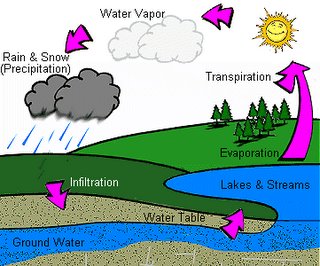
Precipitation (e.g. rain and snow)
When water droplets that make up clouds join to form bigger drops,they then become too heavy to float in the air and they then fall from the sky as either rain or snow. The water will then end up again in lakes, river, sea, the earth and by plants where the process repeats it self all over again. This plays a major role in the water cycle.
Related article:
Why is the sky blue
Published Saturday, January 21, 2006
 This weeks article will look at the presidential line of succession of the United States Government. The presidential line of succession defines who may become or act as President of the United States upon the incapacity, death, resignation, or removal from office (by impeachment and subsequent conviction) of a sitting President or a President-elect. The presidential line of succession went through some changes in 1792, where the Senate President pro tempore was next in line after the vice president to succeed to the presidency, followed by the Speaker of the House. However, in1886, Congress changed the order of presidential succession by replacing the President pro tempore and the Speaker with the cabinet officers. This was however once again changed in 1947 which remains in effect until today. The present law maintains the tradition of ranking order of the Cabinet departments by the year they were established . This means, that each cabinet title is listed in order of importance according to the founding date of that office. This weeks article will look at the presidential line of succession of the United States Government. The presidential line of succession defines who may become or act as President of the United States upon the incapacity, death, resignation, or removal from office (by impeachment and subsequent conviction) of a sitting President or a President-elect. The presidential line of succession went through some changes in 1792, where the Senate President pro tempore was next in line after the vice president to succeed to the presidency, followed by the Speaker of the House. However, in1886, Congress changed the order of presidential succession by replacing the President pro tempore and the Speaker with the cabinet officers. This was however once again changed in 1947 which remains in effect until today. The present law maintains the tradition of ranking order of the Cabinet departments by the year they were established . This means, that each cabinet title is listed in order of importance according to the founding date of that office.
The U.S. Constitution and Federal law govern how a dead, resigned, incapacitated or a removed President of the United States is succeeded in office. According to the Presidential Succession Act of 1947, signed by President Harry Truman, if the President of the United States is incapacitated, dies, resigns, or is for any reason unable to discharge the powers and duties of his office, or is removed from office (impeached and convicted), then that official (cabin member) in the ranking order of the presidential line of succession will assume the office of the President, provided they are qualified as stated by the Constitution to assume the office of the President. This therefore means that cabin member based on the line of presidential succession must meet the Constitutional requirements, which are; must be at least 35 years old, a natural-born U.S. citizen, and have lived in the U.S. for at least 14 years. Below is the presidential line of succession of the United States Government:
1. President
George W. Bush
Role and Duty
Read about him
Visit home site
2. Vice President
Richard Cheney
Role and Duty
Read about him
Visit home site
3. Speaker of the House of Representatives
John Dennis Hastert
Role and Duty
Read about him
Visit home site
4. President Pro Tempore of the Senate
Ted Stevens
Role and Duty
Read about him
Visit home site
5. Secretary of State
Condoleezza Rice
Role and Duty
Read about her
Visit home site
6. Secretary of the Treasury
John Snow
Role and Duty
Read about him
Visit home site
7. Secretary of Defense
Donald H. Rumsfeld
Role and Duty
Read about him
Visit home site
8. Attorney General
Alberto Gonzales
Role and Duty
Read about him
Visit home site
9. Secretary of the Interior
Gale A. Norton
Role and Duty
Read about her
Visit home site
10. Secretary of Agriculture
Mike Johanns
Role and Duty
Read about him
Visit home site
11. Secretary of Commerce
Carlos Gutierrez (ineligible, see note below)
Role and Duty
Read about him
Visit home site
12. Secretary of Labor
Elaine Chao (ineligible, see note below)
Role and Duty
Read about her
Visit home site
13. Secretary of Health and Human Services
Mike Leavitt
Role and Duty
Read about him
Visit home site
14. Secretary of Housing and Urban Development
Alphonso Jackson
Role and Duty
Read about him
Visit home site
15. Secretary of Transportation
Norman Yoshio Mineta
Role and Duty
Read about him
Visit home site
16. Secretary of Energy
Samuel Bodman
Role and Duty
Read about him
Visit home site
17. Secretary of Education
Margaret Spellings
Role and Duty
Read about her
Visit home site
18. Secretary of Veterans Affairs
Jim Nicholson
Role and Duty
Read about him
Visit home site
19. Secretary of Homeland Security
Michael Chertoff
Role and Duty
Read about him
Visit home site
NOTE: Based on the Constitutional requirements Carlos Gutierrez, Secretary of Commerce, is ineligible to assume the office of the president if it should ever become available to him. This is due to the fact that he was born in Cuba. Likewise, Elaine Chao, Secretary of Labor, would also be ineligible to assume the office of the president if it should ever become available. This is also due to the fact that she was born in Taiwan.
It also important to note also that a bill is presently awaiting House approval for the office of the Homeland Security secretary to move up to number 8 on the list of the presidential line of succession. This bill was passed by the Senate in late July 2005.
Related Articles:
Presidents of the United State of America
Political terms and their definitions
Interesting and shocking Facts - Abraham Lincoln and John F. Kennedy
The United Nations in summary - who are they ?
Published Saturday, January 14, 2006
 The term dream can have more than one meaning to us in our everyday life. It can mean ones aspiration, wishes or ambitions in life which every single one of us have whether we demonstrate this openly by sharing it or secretly The term dream can have more than one meaning to us in our everyday life. It can mean ones aspiration, wishes or ambitions in life which every single one of us have whether we demonstrate this openly by sharing it or secretly within our hearts. This can be a ; business idea, career, job, a home, college, marriage, material possession or a change in ones lifestyle and so on. However, this article will be within our hearts. This can be a ; business idea, career, job, a home, college, marriage, material possession or a change in ones lifestyle and so on. However, this article will be looking at dream in terms of that mysterious event that takes place while we are sleeping. In other words very simple things we think of while we sleep. This phenomena has puzzled humans since the earliest of times right up to this very day. We can control our daily thoughts and feelings while we are awake consciously but yet we are incapable of having any control of the events (dreams) that take place in our head while we are in an unconscious state of mind (sleeping) but conscious of these feelings and events that you cannot do anything about whether you like it or not. Thus, ever arousing our curiosity of interest that triggers a lot of philosophical reasoning right to the other end of supernatural agencies. looking at dream in terms of that mysterious event that takes place while we are sleeping. In other words very simple things we think of while we sleep. This phenomena has puzzled humans since the earliest of times right up to this very day. We can control our daily thoughts and feelings while we are awake consciously but yet we are incapable of having any control of the events (dreams) that take place in our head while we are in an unconscious state of mind (sleeping) but conscious of these feelings and events that you cannot do anything about whether you like it or not. Thus, ever arousing our curiosity of interest that triggers a lot of philosophical reasoning right to the other end of supernatural agencies.
1. The Physiological and Psychological Theories
This question for centuries have been the subject of debate and heated controversy due to the many different theories laid down by two different schools of prominent scientists. These two different schools are the physiological school and the psychological school. However, both schools do agree that dreams occurs during the Rapid Eye Movement (REM) phase of our sleep. REM sleep is primarily characterized by movements of the eyes where several physiological changes takes place (heart rate and breathing quickens, the blood pressure rises). The REM was discovered in 1953 by Eugene Aserinsky, a graduate student researcher in physiology, at the University of Chicago and Nathaniel Kleitman, Ph.D., chair of physiology. During this phase of sleep, our closed eyes moves around rapidly while our brain activity peaks, and our muscles becomes temporarily paralyzed.
It is also important to know that there is also a third school camp on this matter that exist in between the other two schools: the physiological school and the psychological school. This third school believes that both schools extreme positions on the function and meaning of dreams to be partly right and partly wrong. This third school argues that dreams may have both physiological and psychological determinants, and therefore can be either meaningful or meaningless which, varies greatly with regards to its psychological significance.
i. Physiological Theory
This theory has to do with the function of our body and brain in relation to the Rapid Eye Movement (REM) phase of sleep. This theory is based on the fact that our Nervous System is always active whether we are sleeping or awake to keep our system in constant motion carrying out essential functions that our lives depends on. The human brain has about 100 billion neurons which connect to thousands of other brain cells. Each playing their job in different regions of the brain through a huge network system. Therefore while we are alive, the brain is constantly transmitting and receiving message from all over our body through the nervous system network which it all has to process and carry out while we are awake or a
sleep in order for us to be alive. Thus, this theory believes that dream takes over that active and conscious part of the brain that is “off-line” while we sleep. This therefore keeps our nervous system components such as the neurons, sensory cells, motor cells, synapses in our brain in constant function of its duty.
This theory is supported by the physiological fact that our brain waves when measured during the REM phase of sleep shows that the electrical activity of the brain is identical to that of when we are awake. The REM sleep phase is where dreaming occurs and is also where several physiological changes take place. At this phase, the muscles relax and the heart rate, breathing and blood pressure increases.
ii. Psychological Theory
This theory has to do with thoughts and our emotions in relation to our dreams. This theory is based around the speculation that our brain being busy all day processing information that during the night when we are a sleep our brain working "off-line" from our conscious state process all the useful stuff from the previous day and get rid of the other leftover stuff that are useless from our brain. This is named by Freud as "day residue" while the rest of the dream is a story that doesn’t deal with actual day events.
Dreams are believed to be a psychological portrait of an individual thus, revealing what is in his/her mind. Based on this, Freudians believe that information about ourself or some aspects of our life can be extracted by several methods of interpretation.
2. Spiritual Beings - according to the Holy Bible
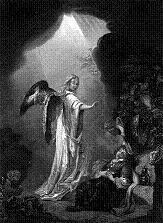 Finally, according to the holy bible, dreams may be caused by spiritual beings such as God or indirectly through his angels. Dream had a religious connation to it by the early Christians. For those of you that believe in God and read the Holy Bible, will also see that dreams was also used by God to express a divine message to his believers. The meaning of the message sent by the Divine were plain and unmistakable. God holding communication with man through dreams is mentioned in Numbers 12:6, and explicitly in Job 33:14 -17 : "For God speaketh once, yea twice, [yet man] perceiveth it not.: In a dream, in a vision of the night, when deep sleep falleth upon men, in slumberings upon the bed; : Then he openeth the ears of men, and sealeth their instruction, : That he may withdraw man [from his] purpose, and hide pride from man." Dreams are also mentioned in several other parts of the Holy Bible. Here are some of them: 1 Samuel 28:15, Genesis 28:12-19, Genesis 40, Jeremiah 23:32 , Zechariah 10:2, and Numbers 12:6 just to name a few. Thus, from the Holy Bible we see that God use dreams as a means of manifesting his will to man using natural psycho-physiological phenomenon so that man may obey his bidding. Finally, according to the holy bible, dreams may be caused by spiritual beings such as God or indirectly through his angels. Dream had a religious connation to it by the early Christians. For those of you that believe in God and read the Holy Bible, will also see that dreams was also used by God to express a divine message to his believers. The meaning of the message sent by the Divine were plain and unmistakable. God holding communication with man through dreams is mentioned in Numbers 12:6, and explicitly in Job 33:14 -17 : "For God speaketh once, yea twice, [yet man] perceiveth it not.: In a dream, in a vision of the night, when deep sleep falleth upon men, in slumberings upon the bed; : Then he openeth the ears of men, and sealeth their instruction, : That he may withdraw man [from his] purpose, and hide pride from man." Dreams are also mentioned in several other parts of the Holy Bible. Here are some of them: 1 Samuel 28:15, Genesis 28:12-19, Genesis 40, Jeremiah 23:32 , Zechariah 10:2, and Numbers 12:6 just to name a few. Thus, from the Holy Bible we see that God use dreams as a means of manifesting his will to man using natural psycho-physiological phenomenon so that man may obey his bidding.
Presently our knowledge on dream and its purpose is very limited. However, it is possible that this can change at anytime due to new generation of researchers. As, our knowledge increase with time so will be the advancement in science and technology.
 Here are some articles on dream and some similar articles of interest: Here are some articles on dream and some similar articles of interest:
Similar Articles of Interest:
Why do people snore? | Why Do We Yawn? | What causes hiccup?
Articles
The "Purpose" of Dreams - dreamresearch.net
Ideas about REM Sleep and Dreams - The American Psychoanalytic Association
Dreaming: Function And Meaning - The Lucidity Institute
Questions & Answers
How Dreams Work - howstuffworks.com | Dream Interpretation - guidetopsychology.com | Commonly Asked Questions About Dreams - dreamschool.org | Common Questions About Dreams - asdreams.org | Dream Questions and Answers - web-us.com
Published Saturday, January 07, 2006
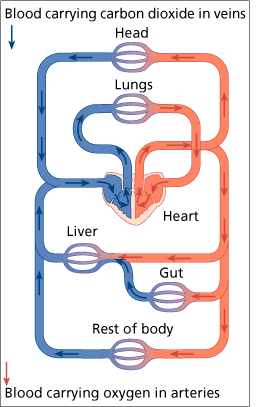
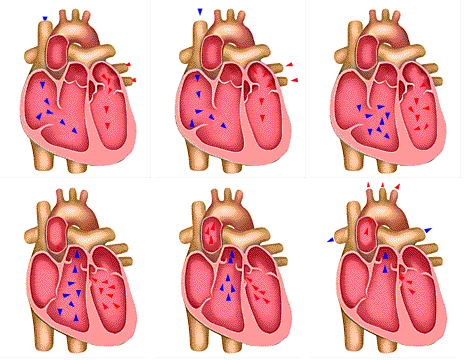
 Blood is a red fluid that contains a complex mixture of cells suspended in a liquid matrix which is transported (circulated) throughout the body by the circulatory system of an organism. It circulates around the body by the heart and delivers Blood is a red fluid that contains a complex mixture of cells suspended in a liquid matrix which is transported (circulated) throughout the body by the circulatory system of an organism. It circulates around the body by the heart and delivers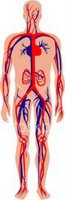 oxygen and other important nutrients to cells of organs and tissues, while at the same time, removing waste product from our body. Blood is located in almost every part of our body, which is due to the network of blood vessels called the circulatory system (see diagram). It is circulated through the body’s heart, arteries, veins and capillaries ( tiny vessels that connect arteries and veins). In order for blood to carry out its functions, it needs to circulate all over our body to all living cells and tissues which it does through the support of the heart that pumps blood throughout our entire body (see diagram of a pumping heart). Thus, it is the fluid of life, a vital life force that all humans need in order to live and sustain life. oxygen and other important nutrients to cells of organs and tissues, while at the same time, removing waste product from our body. Blood is located in almost every part of our body, which is due to the network of blood vessels called the circulatory system (see diagram). It is circulated through the body’s heart, arteries, veins and capillaries ( tiny vessels that connect arteries and veins). In order for blood to carry out its functions, it needs to circulate all over our body to all living cells and tissues which it does through the support of the heart that pumps blood throughout our entire body (see diagram of a pumping heart). Thus, it is the fluid of life, a vital life force that all humans need in order to live and sustain life.
In this article we will look at the functions and compositions of blood and in some future article of this same category, we will look at Blood Types. This is the logical sequence that has to be taken in order to get a better understanding of blood. Some many articles ago we looked at what causes the sound of your heart beat if you are interested and need an answer to this question, as well as, to understand how the heart functions then you can read this article also.
General function of blood
1. Distribution/Transportation:
Transportation of dissolved gases (carbon dioxide and oxygen), nutrients, enzymes, blood cells (white blood cells 'leucocytes' and red blood cells 'erythrocytes'), hormones and metabolic wastes.
Explanation:
i. Blood carries oxygen from the lungs to the cells of organs and tissues and carbon dioxide from those organs and tissues to the lungs inside our body.
ii. It carries hormones from endocrine glands towards their target cells to the kidneys for excretion.
iii. Blood distributes nutrients absorbed at the digestive tract or released from storage in adipose tissue (a body tissue containing stored fat that serves as a source of energy) or in the liver. These nutrients includes glucose, amino acids, micro-nutrients such as vitamins & minerals), fatty acids and glycerol.
2. Regulation :
Controls and maintain normal pH
The regulation of the pH and ion composition of interstitial fluids (fluid situated between parts or in the interstices of a tissue.)
Explanation:
Maintains the balance of acid-base metabolism as well as, to absorb and neutralize acids that are made by active cell tissues. For example, lactic acid produced by skeletal muscles. The pH of blood must remain in the range 6.8 to 7.4. If it falls out of this range then this will initiate and result in the destruction of cells.
Maintains the stabilization of Body Temperature
Explanation:
Blood gains heat by absorbing the heat generated by active skeletal muscles and from deep seated organs in the body which it redistributes over the body to other organs and tissues. If the body temperature is already high then the heat will be lost at the surface of the skin. Conversely, if the body temperature is very low then the heat will be taken directly to the brain, as well as, to other temperature sensitive organs inside the body.
3. Maintains fluid volume
Explanation:
Salts and proteins in the blood maintain a diffusional gradients to prevent fluid loss from bloodstream. Excess salt is removed from the body in urine.
4. Defense against pathogens and toxins
i. Blood contains different types of white blood cells where each have specific roles in which they fight infections or remove cell debris. White blood cells are always patrolling the circulatory system similar to that of a police to protect the body from harmful pathogens and toxins. When there is an infection or invasion by pathogens, they quickly migrate to the infected area and attack the pathogens or toxins.
ii. There are also antibodies that the blood carries that attack and kill invading pathogens (organism) or foreign compounds.
5. The prevention of blood loss at an injury site(s) - Blood clotting:
Blood contain enzymes and other substances that respond to a break in the wall of a blood vessel by initiating the blood clotting process. This acts as a temporary patch that prevents further loss of blood.
Composition of Blood
Click to view diagarm
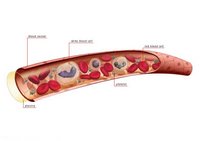
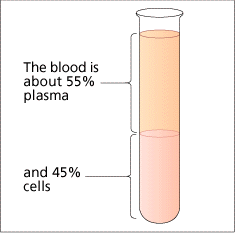
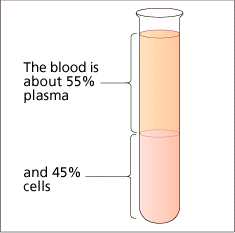 Blood consists of many components (constituents). This unique composition of blood that makes up its volume includes: Blood consists of many components (constituents). This unique composition of blood that makes up its volume includes:
i. 55% Plasma
and
ii. 45% formed elements , i.e. blood cells and cell fragments (platelets). Of these 99% are red blood cells and the other 1% are white blood cells and platelets.
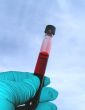
The diagram shows a test tube containing blood which when left undisturbed separates into a pale liquid called plasma and a solid layer of blood cells.
Plasma
Plasma is mainly made up of water (90-92 %) which is a pale yellow sticky fluid component of the blood. It is the liquid part of the blood and contains significant quantities of dissolved proteins. These plasma proteins are albumins, globulins and fibrinogen- a clotting factor. It also contains chemicals substances such as hormones, antibodies, enzymes, glucose, fat particles, salts, etc.
Function:
i. Provides the medium through which the blood cells are transported around the body
ii. Helps to control the pH of the blood and the body tissues. This provides the right environment in which cell thrive to carry out their roles effectively.
iii. Helps to maintain an ideal balance of fluid volume.
iv. Helps to maintain an optimum body temperature throughout the body of an organism
Blood cells
Blood cells are made in the bone marrow by blood 'stem' cells. There are three types of blood cells.
i. Red Blood Cells (also called Erythrocytes, pronounced: ih-rith-ruh-sytes)
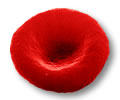
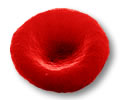 These are biconcave shaped cells that look like wheel of a car that has a depressed surface at both its end. This unique surface shape of red blood cells is to maximize its surface area in order to facilitate the carrying of oxygen and carbon dioxide molecules. Their primary function is to carry oxygen from the lungs ( during inhalation) to the cells all around the body and carbon dioxide (a waste product) from the cells to the lung (during exhalation). Here it drops off the carbon dioxide molecules and pick up oxygen molecules and thus, keep repeating the cycle. They do this through hemoglobin (pronounced: hee-muh-glow-bun), an iron containing protein that actually carries the oxygen throughout the body and gives blood its red color. One drop of blood contains about five million red cells. These are biconcave shaped cells that look like wheel of a car that has a depressed surface at both its end. This unique surface shape of red blood cells is to maximize its surface area in order to facilitate the carrying of oxygen and carbon dioxide molecules. Their primary function is to carry oxygen from the lungs ( during inhalation) to the cells all around the body and carbon dioxide (a waste product) from the cells to the lung (during exhalation). Here it drops off the carbon dioxide molecules and pick up oxygen molecules and thus, keep repeating the cycle. They do this through hemoglobin (pronounced: hee-muh-glow-bun), an iron containing protein that actually carries the oxygen throughout the body and gives blood its red color. One drop of blood contains about five million red cells.
ii. White cells (also called leukocytes, pronounced: loo-kuh-sytes)
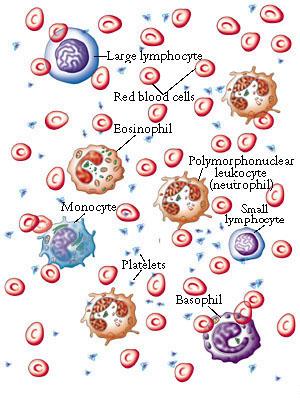
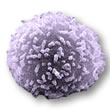 These cells primary role is to defend the body against pathogens - disease producing bacteria, viruses and fungi. These are colorless cells and that possess a nucleus unlike that of red blood cells. There are different types of white cells such as neutrophils (polymorphs), lymphocytes, eosinophils, monocytes, basophils (See diagarm). They are all part of the immune system and are mainly involved in combating infection. In the blood stream, there are about 600 red blood cells for every white blood cell. These cells primary role is to defend the body against pathogens - disease producing bacteria, viruses and fungi. These are colorless cells and that possess a nucleus unlike that of red blood cells. There are different types of white cells such as neutrophils (polymorphs), lymphocytes, eosinophils, monocytes, basophils (See diagarm). They are all part of the immune system and are mainly involved in combating infection. In the blood stream, there are about 600 red blood cells for every white blood cell.
iii. Platelets (also called thrombocytes, pronounced: throm-buh-sytes)
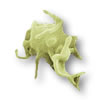 These are very small cell fragments that are irregularly shaped, colorless with a sticky surface that help in the clotting process by sticking to the lining of blood vessels. Thus, whenever a blood vessel become damaged (tear) their purpose is to prevent loss of blood by clumping together to form a plug to stop bleeding and then secrete other chemicals that help the blood to clot and the blood vessel to be repaired. Platelets are made in the bone marrow and survive in the circulatory system for an average of 9 days before being removed from the body by the spleen. These are very small cell fragments that are irregularly shaped, colorless with a sticky surface that help in the clotting process by sticking to the lining of blood vessels. Thus, whenever a blood vessel become damaged (tear) their purpose is to prevent loss of blood by clumping together to form a plug to stop bleeding and then secrete other chemicals that help the blood to clot and the blood vessel to be repaired. Platelets are made in the bone marrow and survive in the circulatory system for an average of 9 days before being removed from the body by the spleen.
Some Did You Know Facts of Blood
- Blood accounts for about 1/13th of our body weight, i.e., about 5 to 6 litres in a typical adult.
- Red blood cells live about 120 days in the circulatory system.
- The shelf life of donated red blood cells is 42 days.
- A newborn baby has about one cup of blood in his body.
- Healthy bone marrow makes a constant supply of red cells, plasma and platelets.
Some Diseases Of The Blood
- Hemophilia (pronounced: hee-muh-fil-ee-uh), is a hereditary bleeding disorder. This inherited condition is resulted from the lack of particular clotting factors ( a clotting protein) in the blood. This occurs almost exclusively in men and boys, in which the blood clots much more slowly than normally, resulting in extensive bleeding from even minor injuries. People with severe hemophilia are at risk of life-threatening internal bleeding, whether they have been injured or not. They can also suffer form excessive bleeding caused by trauma and bruises.
- Von Willebrand disease, the most common hereditary bleeding disorder, also involves a clotting-factor deficiency. It affects both males and females. (read more here)
- Anemia is a blood condition in which there are too few red blood cells than normal or the red blood cells are deficient in hemoglobin, resulting in poor health. Common causes include a lack of dietary iron, heavy blood loss, or the production of too few red blood cells due to disorders such as leukemia.
- Leukemia (a blood cancer, pronounced: loo-kee-mee-uhz). An often fatal cancer in which white blood cells displace normal blood cells, leading to infection, shortage of red blood cells anemia, bleeding, and other disorders.
Related article:
What causes the sound of your heart beat
More reading on blood cells:
Fun Science
Some Blood Related Sites:
Blood Donation | America's Blood Centers | Blood Journal | United Blood Services | BMC Blood Disorders
|
|
Message Board
FeedBack Appreciated
Please spare some time to give your feedback about this site. Thanks in advance.
|
|
|
|
Message from the Author
 R. Edmondson
United States
R. Edmondson
United States
Did You Know site is used as a learning tool to provide a stimulating learning environment for general knowledge development; to promote increased diversity on the online learning community and to incorporate the site’s informative quality content with the best of online communication platform (blog) in making knowledge accessible and free to all.
Thanks for the support.
|
|
|
|
|


 We have all looked up to the sky and most times seen this white puffy cloud speeding or moving slowly over the sky which varies in shape and size from time
 to time. Sometimes clouds seem to cover the most of the sky, at other times it may scattered all over the sky, other times you may just see a single cloud moving over the vast blue sky and sometime
 s they are no where to be found in the sky - leaving the blue sky spotless. Clouds can tell us to some extent how a day is going to turn out. Some of us even look to the clouds to
 see if their are any clues on any weather condition that may cause rainfall or a storm. So, we have all seen a cloud and can even describe its'appearance but have you ever wondered what clouds are and how they are formed? Well, if you are in search for an answer then this weeks' article will therefore answer this question. Ponder or wonder no more! In some future article we will look on the different types of cloud , the naming of clouds and there classification.
 A cloud is a visible accumulation of very tiny water droplets or solid ice crystals that float in the air (troposphere). Clouds are usually white in appearance due to the fact that it reflects (scatter) all the visible wavelengths of light from the sun. However, clouds can also appear dark in appearance
 taking on the color grey or black. This will depend on the amount of sunlight passing through it, in relation to the thickness of the cloud. clouds are always in motion and changing shape which is caused by the wind and warmer air (dryer air) as water is lost to the surrounding air.