Published Saturday, December 31, 2005
 The end of another year is here again. All around the world there will be celebrations with parties, parades and fireworks to send out the old year with a bang while bringing in the New Year. We all have to give thanks for making it through another year. This is the time that we should reflect on things that made us happy throughtout the year and other things that didn't quite go the the way we had The end of another year is here again. All around the world there will be celebrations with parties, parades and fireworks to send out the old year with a bang while bringing in the New Year. We all have to give thanks for making it through another year. This is the time that we should reflect on things that made us happy throughtout the year and other things that didn't quite go the the way we had planned it to be. However, we can learn from these past experiences whether they be bad or good to make the New Year even better. Recently I wrote an article on How to say Merry Christmas in Different Languages and was asked by some readers to do one on How to say Happy New Year in different languages. So, this has delayed me a little planned it to be. However, we can learn from these past experiences whether they be bad or good to make the New Year even better. Recently I wrote an article on How to say Merry Christmas in Different Languages and was asked by some readers to do one on How to say Happy New Year in different languages. So, this has delayed me a little  since I had to change my article theme for this week. The list below are listed since I had to change my article theme for this week. The list below are listed according to language rather than the list of countries where the language is being spoken. The list below might not be a comprehensive one however, it will be updated when there are additions. Also, there is a Year In Review Section where you can read or reread some past interesting articles that I picked randomly. It is possible that you might have not read any of these articles depending on when you became a reader, visitor, stalker or how far you went into my archives. Now, while you are having fun and preparing to ring in the New Year with friends and love ones here is a list of greetings of how to say Happy New Year in different languages around the world. according to language rather than the list of countries where the language is being spoken. The list below might not be a comprehensive one however, it will be updated when there are additions. Also, there is a Year In Review Section where you can read or reread some past interesting articles that I picked randomly. It is possible that you might have not read any of these articles depending on when you became a reader, visitor, stalker or how far you went into my archives. Now, while you are having fun and preparing to ring in the New Year with friends and love ones here is a list of greetings of how to say Happy New Year in different languages around the world.
   
Language How To Say “Happy New Year”
A
Afrikaans: ……………….…Gelukkige nuwe jaar
Arabic:…………………….…Antum salimoun
Austrian...........................A guads Neichs Johr olle mitanand!
B
Bengali:………………………Shuvo Nabo Barsho
C
Cantonese........................Sun nin fai lok!/Sun Leen Figh Lok!
Chinese:……………………..Chu Shen Tan
Czechoslovakia:…………..Scastny Novy Rok
D
Dutch:………………………..Gelukkig Nieuwjaar
E
English:………………………Happy New Year!
Eskimo:………………………Kiortame pivdluaritlo
F
Finnish:………………………Onnellista Uutta Vuotta
French:……………………….Bonne Annee
G
Gaelic:………………………..Bliadhna mhath ur
German:……………………..Prosit Neujahr
Greek:………………………..Kenourios Chronos/Chronia Pola!
H
Hawaiian:……………………Hauoli Makahiki Hou
Hebrew:……………………..L'Shannah Tovah
Hindi:…………………………Subh Nab Bars
Hungarian:………….………Boldog Uj Evet Kivanok/Boldog Ujevet!
I
Iraqi:………………………….Sanah Jadidah
Irish:………………………….Bliain nua fe mhaise dhuit
Italian:……………………….Buon Capodanno
J
K
Kisii:…………………………..Somwaka omoyia owuya
Khmer:……………………….Sua Sdei Chnam Thmei
L
Latin:...................................Volo omnes felicem novum annum habere!
Laotian:.……………………..Sabai dee pee mai
M
Mandarin:.........................Xin nian kuai le!
N
Norwegian:…………………Godt Nyttar
O
P
Papua New Guinea:………Nupela yia i go long y
Philippines:…………………Manigong Bagong Taon
Polish:…………………….…..Szczesliwego Nowego Roku
Portuguese:…………………Feliz Ano Novo
Punjabi:………………………Nave sal di mubarak
Q
R
Russian:………………………S Novim Godom
S
Serbo-Croatian:……….…Scecna nova godina
Singhalese:………………….Subha Aluth Awrudhak Vewa
Slovak:………………………..A stastlivy Novy Rok
Spanish:………………………Feliz Ano Nuevo
Swahili:……………………….Heri Za Mwaka Mpya
Sudanese:……………………Warsa Enggal
T
Telegu:………………………..Noothana samvatsara shubhakankshalu
Thai:……………………………Sawadee Pee Mai
Turkish:……………………….Yiliniz Kutlu Olsun
U
Ukrainian:……………………Shchastlyvoho Novoho Roku
Urdu:......................................Nayya Saal Mubarak!
V
Vietnamese:………………….Chuc Mung Tan Nien
W,X,Y,Z
Did You Know?
 Not all countries around the world celebrate New Year at the same time due to their time zones. Likewise neither do they celebrate this holiday the same way due to their culture and beliefs. Also, some people around around the world use different calendars. Some calendars in use today are Chinese calendar, Christian calendar, Indian calendar, The Islamic calendar (or Hijri calendar), Not all countries around the world celebrate New Year at the same time due to their time zones. Likewise neither do they celebrate this holiday the same way due to their culture and beliefs. Also, some people around around the world use different calendars. Some calendars in use today are Chinese calendar, Christian calendar, Indian calendar, The Islamic calendar (or Hijri calendar), The Jewish calendar (official calendar of Israel), Ethiopian calendar ( based on the Coptic calendar), Persian calendar (a solar calendar), Hindu Çaka and Pawukon calendar used by the Balinese and so on. The Jewish calendar (official calendar of Israel), Ethiopian calendar ( based on the Coptic calendar), Persian calendar (a solar calendar), Hindu Çaka and Pawukon calendar used by the Balinese and so on.
Here is a site that you find stuff on Chinese New Year and Calendar
Some Site of Interest relating to New Year:
Chinese New Year | Holidays Graphics | Children's New Year Games | Music with Animated Cartoon
2005 Year in Review
 Here are some past articles for 2005 that you should find interesting. You can check the archive for other interesting articles that shaped the success and purpose of this blog in 2005. This is( and soon was) the year this site came into existence. A very special year for Universal Facts (Did You Know?). Thanks to all readers and visitors that help to fulfill the aim and purpose of this site. Here are some past articles for 2005 that you should find interesting. You can check the archive for other interesting articles that shaped the success and purpose of this blog in 2005. This is( and soon was) the year this site came into existence. A very special year for Universal Facts (Did You Know?). Thanks to all readers and visitors that help to fulfill the aim and purpose of this site.
Some list of past Universal Facts articles according to their date:

|
Published Friday, December 23, 2005
 Just imagine how this world would be without colors or better still imagine yourself living in a world that is only in black and white. Would life be as beautiful, enjoyable and splendid as how it is now with regards to color? The beautiful blue sky would lose its unique color, trees and flowers their Just imagine how this world would be without colors or better still imagine yourself living in a world that is only in black and white. Would life be as beautiful, enjoyable and splendid as how it is now with regards to color? The beautiful blue sky would lose its unique color, trees and flowers their splendid colors just to name a few. Our behavior towards a lot of things that control our present lives would not exist. No it wouldn’t, color affects us both physiologically and psychologically that impacts on our lives greatly both consciously and unconsciously. Color from ever since has been used to shape and define our lives, our habits, our values, and our feelings. The colors we chose to wear, to decorate our homes, our gardens, and so on gives us a personal insight about what is going on inside our innermost feelings and emotions. Even the food we eat, the color is taken into account by food industries and advertising companies when packaging and marketing their products. For example, how many of us would find a green drink appealing? We usually associate this color with a poisonous substance. Color is a silent language that we all react to based on whether it is a behavioral response or a learned response. For example, our color preferences that we have is based on our experience of past events in our daily social life. This would be a learned response. While on the other hand, a behavioral response happens naturally without us being aware of it. For example, the color red can heighten our perception of danger just by seeing it - the color of blood. splendid colors just to name a few. Our behavior towards a lot of things that control our present lives would not exist. No it wouldn’t, color affects us both physiologically and psychologically that impacts on our lives greatly both consciously and unconsciously. Color from ever since has been used to shape and define our lives, our habits, our values, and our feelings. The colors we chose to wear, to decorate our homes, our gardens, and so on gives us a personal insight about what is going on inside our innermost feelings and emotions. Even the food we eat, the color is taken into account by food industries and advertising companies when packaging and marketing their products. For example, how many of us would find a green drink appealing? We usually associate this color with a poisonous substance. Color is a silent language that we all react to based on whether it is a behavioral response or a learned response. For example, our color preferences that we have is based on our experience of past events in our daily social life. This would be a learned response. While on the other hand, a behavioral response happens naturally without us being aware of it. For example, the color red can heighten our perception of danger just by seeing it - the color of blood.
 Color symbolism can vary dramatically between various cultures around the world that perceive colors completely different. For example, unlike Western cultures, the Chinese use white instead of black during funerals. Why you might ask? This is due to the fact that they associate white with the winter time in which nature is dead. Color is also associated with different religious and spiritual meanings in various cultures. Thus, this article will mostly cover the meaning of colors in the Western world however, if it is possible, a note will be made of its meaning in different cultures. Color symbolism can vary dramatically between various cultures around the world that perceive colors completely different. For example, unlike Western cultures, the Chinese use white instead of black during funerals. Why you might ask? This is due to the fact that they associate white with the winter time in which nature is dead. Color is also associated with different religious and spiritual meanings in various cultures. Thus, this article will mostly cover the meaning of colors in the Western world however, if it is possible, a note will be made of its meaning in different cultures.

Red
Excitement, energy, passion, desire, movement, speed, strength, health, good fortune, vigor, power, heat, love, all things intense and passionate.
Negative: aggression, danger, fire, blood, war, violence, lust, stop, revolution, overwhelming and agitated.
Some Cultures :
China - symbol of celebration and luck, used in many cultural ceremonies that range from funerals to weddings.
India - color of purity (used in wedding outfits).
United States - Christmas color when combined with green, Valentines Day when combined with pink, indicates stop (danger) at traffic lights.
Eastern cultures - signifies joy when combined with white.
Associations:
Holiday: Yule (Christmas)
Planet: Mars
Day: Tuesday
Astrological: Scorpio
Yellow
Joy, happiness, optimism, idealism, imagination, hope, sunshine, summer, cheerful, laughter gold, philosophy, caution, brightness, intelligence, knowledge, learning, concentration, persuasion, charm, confidence, creativity, happiness, organization and Spring time.
Negative: dishonesty, cowardice, betrayal, jealousy, covetousness, deceit, illness, hazard, criticism, laziness, or cynicism.
*Note: said that too much causes babies to cry and tempers to flare. Also, speeds up metabolism and creativity increases sales.
Some Cultures :
Asia - sacred, imperial.
Western cultures - joy, happiness.
Associations:
Planet: Mercury
Day: Wednesday
Astrological: Gemini, Leo
Blue
Peace, tranquility, calm, devotion, sincerity, honor, steadfast, dependable, loyal, productive, stability, harmony, unity, trust, truth, confidence, spirituality, intuition, inspiration, conservatism, security, cleanliness, order, loyalty, sky, water, ice, coolness, technology, appetite suppressant, love, acceptance, patience, understanding, cooperation, comfort and loyalty.
* Pale blue (baby blue) stands for an infant boy.
Negative: depression, obscenity, fear, coldness, and passivity.
Some Cultures :
China - associated with immortality.
Colombia - associated with soap..
Hindus - the color of Krishna.
Jews - holiness.
Middle East - protective color.
* Note: Blue is often considered to be the safest global color.
Associations:
Planets: Moon,Venus, Saturn, Jupiter
Days: Monday, Friday, Saturday, Thursday
Astrological: Libra, Sagittarius
Orange
Balance, encouragement, warmth, enthusiasm, vibrant, expansive, flamboyant, demanding of attention, steadfastness, courage, confidence, friendliness, cheerfulness, warmth, excitement, energy fun times, plenty, kindness, adaptability, stimulation, attraction, happy energetic days and ambition.
Negative: Ignorance, inferiority, warning, danger, fire, sluggishness and superiority.
Some Cultures :
Ireland - religious significance (Protestant).
United States - inexpensive goods, Halloween (with black).
Associations:
Holiday: Candlemas
Deities: Brigid
Planets: Sun, Mars, Mercury
Days: Sunday, Tuesday, Wednesday
Astrological:
Green
Nature, environment, healthy, masculine, calming, good luck, prosperity, vitality, renewal, youth, vigor, spring, generosity, fertility, money, food, go, grass, hope, growth, charity, wealth, freshness, youth, soothing, sharing and responsiveness.
Negative: jealousy, inexperience, envy, misfortune, greed, constriction, guilt, and disorder.
Some Cultures :
China - studies indicate this is not a good color choice for packaging, green hats mean a man's wife is cheating on him.
France - studies indicate this is not a good color choice for packaging.
India - the color of Islam.
Ireland - religious significance (Catholic).
Some tropical countries - associated with danger
United States - indicates go (safe) at traffic lights, environmental awareness, St. Patrick's Day, Christmas color (red and green).
Associations:
Planets: Venus
Mercury
Days: Friday, Wednesday
Holidays: Spring Equinox, Beltane
Astrological: Taurus
Purple
Royalty, piety, sanctity, sentimentality, spirituality, nobility, ceremony, power, mysterious, transformation, wisdom, enlightenment, sophistication, respect and religion.
Negative: cruelty, tension, arrogance, mourning, bruised or foreboding.
Some Cultures :
Western cultures - royalty.
Associations:
Planet: Jupiter
Day: Thursday
Astrological: Sagittarius
Gray
Security, reliability, balance, neutrality, intelligence, staid, modesty, practical, dignity, maturity, timeless, solid, conservative.
Negative: old age, sadness, boring, death, canceling, depression, and loss of direction.
Some Cultures :
Associations:
Planet: Moon
Day: Monday
Deity: Athena
Astrological: Virgo
Brown
Earth, hearth, home, outdoors, friendship, reliability, comfort, Earth, grounding, endurance, stability, simplicity and comfort.
Negative: mourning
Some Cultures :
Colombia - discourages sales.
Associations:
Planets: Moon (tan browns), Venus (all), Saturn (dark browns)
Days: Monday/ Friday/ Saturday
Deity: Gaia
Astrological: Capricorn
Holiday: Mabon
White {this color is used since background color is white}
Reverence, purity, simplicity, cleanliness, peace, truth, glory, cleansing, healing, protection, humility, precision, innocence, youth, birth, winter, snow, good, marriage (Western cultures), cold, clinical, sterile, the full moon, healing, peace, spiritual strength, exorcism, consecration, meditation, divination.
Negative: Blind, winter, unimaginative, surrender, cold, sterility, distant, death (Eastern cultures).
Some Cultures :
Eastern cultures - mourning, death.
Japan - white carnations signify death.
United States - purity (used in weddings).
China- it symbolizes age, autumn, death, misfortune, virginity and purity.
Associations:
Planet: Moon
Day: Monday
Astrological: Cancer
Black
Dramatic, classy, committed, serious, power, authority, sexuality, sophistication, formality, elegance, wealth, depth, style, absence of color, good technical color.
Negative: mystery, fear, evil, anonymity, unhappiness, sadness, remorse, anger, mourning, ignorance, coldness, unconscious, underground, satanic rituals, darkness, death (Western cultures).
Some Cultures :
Western cultures - mourning, death.
Associations:
Holiday: Samhain
Planet: Saturn
Day: Saturday
Deities: The Crone
Astrological: Scorpio & Capricorn
Pink
Friendship, unconditional love, conviviality, affections, unselfish emotions, spiritual healing, emotional love.
* pale pink stands for an infant girl.
Negative:
Some Culture:
Associations:
Planet:Venus
Day: Friday
Silver
Purity, the moon, treasure, values, female energy, the unconscious mind.
Negative:
Some Culture:
Associations:
Day: Monday
Astrological: Gemini
Deity: Artemis and other Moon Goddesses
Gold
The sun, male energy, wealth, financial wisdom, security, understanding, luck, conscious mind, attracting happiness, activity, intelligence.
Negative:
Some Culture:
Associations:
Planet: Sun
Day: Sunday
Astrological: Leo
Deity: Apollo and other Sun Gods
Did You Know ?
Due to the fact that color affects us both physiologically and psychologically companies such as advertisers, food manufactures, packaging companies , professional webdesigners, car designers, office decorators and so on all use certain colors, shades and tone that will have a positive effect on us. This will influence us buying a product based on its color and the package it comes in. Buildings that are decorated with the right colors can let us feel relaxed and calm.
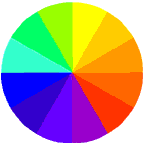
Colors can be broken into three different categories: neutrals, warms and cools:
Neutral colors
Black, white, gray, beige, brown
Warm colors
Red, orange, yellow, yellow-green, purple
Cool colors
Blue, violet, turquoise, sea-green, green
Need to know what color are you?
Find out at Spacefem.com
Related articles of interest:
How Rainbows Are Formed - What Causes a Rainbow?
Why are traffic lights Red, Yellow and Green?
Why leaves change color in fall?
What causes hair to turn gray?
Why do people have different colors of skin?
Why is the sky blue?
What Colors Say About Your Personality | Color Theory in Action
Published Friday, December 16, 2005
 Yawning is an involuntary intake of breath through a wide open mouth and is usually triggered by fatigue, boredom or whenever we feel sleepy. It can also be triggered when you watch another person yawn. This demonstrates to us, as humans, that we unconsciously and automatically are influenced by the behavior of others. Reading this article will even inspire you to yawn while reading about yawning! Yawning is an involuntary intake of breath through a wide open mouth and is usually triggered by fatigue, boredom or whenever we feel sleepy. It can also be triggered when you watch another person yawn. This demonstrates to us, as humans, that we unconsciously and automatically are influenced by the behavior of others. Reading this article will even inspire you to yawn while reading about yawning!

 So, after a hards day work on the job or a long boring one you will find your self yawning quite often while watching the clock or if you are a student, you may yawn from the fatigue of your study or from the boredom of the class and you might even yawn now and again while browsing the internet as you read and so on. However, for you to be reading this article up to this point shows you are curious and baffled by the mystery of the reason why we yawn. You may be surprised to know that you are not alone since the reason why we yawn is not completely understood. Thus, this article will look on the theories that explain the reason why we yawn. So, after a hards day work on the job or a long boring one you will find your self yawning quite often while watching the clock or if you are a student, you may yawn from the fatigue of your study or from the boredom of the class and you might even yawn now and again while browsing the internet as you read and so on. However, for you to be reading this article up to this point shows you are curious and baffled by the mystery of the reason why we yawn. You may be surprised to know that you are not alone since the reason why we yawn is not completely understood. Thus, this article will look on the theories that explain the reason why we yawn.
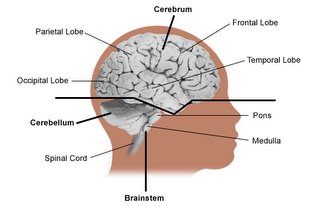
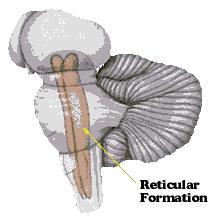
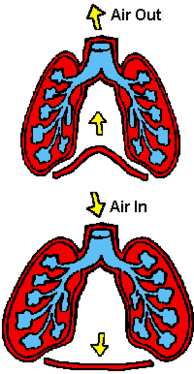
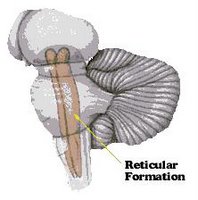 Before we get into the theories we will quickly look at the part of the brain that makes us yawn. The part of the brain that make us yawn is the Reticular Formation which is a part of the brain stem that is found at the lower section of our brain (see diagram at left). The reticular formation is a region running through the middle of the hindbrain which leads into the midbrain. This part of the brain extends down into the spinal cord and contain sensory nerves that allow us to feel, touch and smell while the motor nerves allow us to move. The Reticular Formation function is to collect data input signals from other sections of the brain that control coordination (skeletal muscles) and pass on this data to the large cerebral cortex, where the information is processed and the necessary response is then executed such as us yawning. Here, certain sections of the brain "tell" your mouth muscles to move and stretch. Also, during yawning, the abdominal muscles and diaphragm also play an active role in the yawning process. When you yawn the diaphragm (see diagram) moves down to allow the lungs to expand causing air to enter. This is called inhalation. Conversely, when the diaphragm relaxes (moving up) the lungs contracts sending air out of the lungs. This process is called exhalation. These are all controlled by the motor cortex in the cerebrum and areas in the cerebellum of the brain. Thus, there are several parts of our brain that help in the yawning process which are controlled by several different regions of the brain. The reticular formation is also involved in sleeping, waking up and vomiting. Before we get into the theories we will quickly look at the part of the brain that makes us yawn. The part of the brain that make us yawn is the Reticular Formation which is a part of the brain stem that is found at the lower section of our brain (see diagram at left). The reticular formation is a region running through the middle of the hindbrain which leads into the midbrain. This part of the brain extends down into the spinal cord and contain sensory nerves that allow us to feel, touch and smell while the motor nerves allow us to move. The Reticular Formation function is to collect data input signals from other sections of the brain that control coordination (skeletal muscles) and pass on this data to the large cerebral cortex, where the information is processed and the necessary response is then executed such as us yawning. Here, certain sections of the brain "tell" your mouth muscles to move and stretch. Also, during yawning, the abdominal muscles and diaphragm also play an active role in the yawning process. When you yawn the diaphragm (see diagram) moves down to allow the lungs to expand causing air to enter. This is called inhalation. Conversely, when the diaphragm relaxes (moving up) the lungs contracts sending air out of the lungs. This process is called exhalation. These are all controlled by the motor cortex in the cerebrum and areas in the cerebellum of the brain. Thus, there are several parts of our brain that help in the yawning process which are controlled by several different regions of the brain. The reticular formation is also involved in sleeping, waking up and vomiting.
Here are three leading theories on why we yawn:
The Physiological Theory
This accepted theory states that when nerves in the brain stem find there's not enough oxygen in the lungs, we yawn by drawing in more oxygen rich air into the lungs followed by exhaling to remove the build up of carbon dioxide in our blood. If air sacs in the lungs don’t get enough oxygen then the tissue stiffen up a little causing the brain to respond by letting us yawn to get in more oxygen into the body. However, an expert on yawning Robert Provine, a psychologist at the University of Maryland, Baltimore County, tested this theory and found that getting more oxygen into our respiratory system or decreasing the amount of carbon dioxide from the environment didn't prevent yawning from happening.
Also, fetuses for instance, have been observed yawning in the womb, yet it is a known fact that they do not take oxygen in through their lungs.
The Boredom Theory
This theory states that yawning is caused by fatigue, boredom or drowsiness. This we can definitely relate to when listening to a boring speech, or when we feel tired and sleepy. Thus, displaying to others or as well as ourselves that we are either bored, tired or just feeling sleepy.
The Evolution Theory
This theory states that yawning originated with our ancestors who used yawning for displaying their teeth as a sign of intimidation and territoriality. As early man become more civilized, it lost its aggressiveness.
Conclusion:
 Yawning is an involuntary response that have baffled humans for decades and even though we may have more knowledge through the advancement in science and technology, the mystery of why we yawn is still not completely solved yet. It is still not known exactly how a yawn occurs. The brain being the most sophisticated organ in our possession might be the key to this discovery. After all, the human brain has about 100 billion neurons which connect to thousands of other brain cells. Each playing their job in different regions of the brain through a huge network system. Yawning is an involuntary response that have baffled humans for decades and even though we may have more knowledge through the advancement in science and technology, the mystery of why we yawn is still not completely solved yet. It is still not known exactly how a yawn occurs. The brain being the most sophisticated organ in our possession might be the key to this discovery. After all, the human brain has about 100 billion neurons which connect to thousands of other brain cells. Each playing their job in different regions of the brain through a huge network system.
Did you yawn while reading all of this? If you did, I hope it was not from boredom. I am yawning as this sentence is being written (YAWN).
Here Are Some Quick Did You Know Facts On Yawning:

- Reading about yawning will make you yawn.
- Yawning is contagious. Seeing someone yawning will make you yawn too, usually within five minutes.
- Most yawns occur during the hour before sleeping and the hour after waking.
- All animals yawn - fish, birds, snake, dogs, cats etc.
- Research has shown that at 11 week old fetuses yawn.
- The average duration of a yawn is about 6 seconds.
- The hypothalamus, a part of the brain, plays a role in yawning. Research has shown that some neurotransmitters (for example, dopamine, excitatory amino acids, nitric oxide) and neuropeptides increase yawning if injected in the hypothalamus of animals.
 Here are some similar articles of interest and some sites with articles on yawing that you might also find interesting. Here are some similar articles of interest and some sites with articles on yawing that you might also find interesting.
Why do people snore? | Why Do We Dream? | What causes hiccup?
| Scientific American | Neuroscience for Kids | Wikipedia |
Published Friday, December 09, 2005
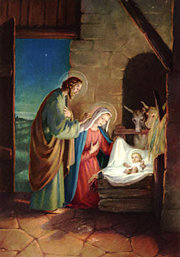
 Christmas is the celebration of the birth of Jesus for members of the Christian religion. It is both a holiday and a holy day that is usually observed on December 25 of each year. However, it is also celebrated as a secular holiday in many countries around the world. Thus, it is largely commercialized by businesses and is characterized by the exchanging of gifts amongst families and special friends. It is a time for family gatherings, holiday meals, fun, and festivities. A time for Santa Claus (Father Christmas), stars, carolers, twinkling lights, ornaments and gifts. However, Christmas is the most Christmas is the celebration of the birth of Jesus for members of the Christian religion. It is both a holiday and a holy day that is usually observed on December 25 of each year. However, it is also celebrated as a secular holiday in many countries around the world. Thus, it is largely commercialized by businesses and is characterized by the exchanging of gifts amongst families and special friends. It is a time for family gatherings, holiday meals, fun, and festivities. A time for Santa Claus (Father Christmas), stars, carolers, twinkling lights, ornaments and gifts. However, Christmas is the most economically significant holiday of the year in most countries. The United States government declared Christmas a federal holiday on June 26, 1870 and today it is one of the biggest event of the year. All schools/colleges/universities, federal government, all state governments and most businesses usually give employees/students one or two days off. economically significant holiday of the year in most countries. The United States government declared Christmas a federal holiday on June 26, 1870 and today it is one of the biggest event of the year. All schools/colleges/universities, federal government, all state governments and most businesses usually give employees/students one or two days off.
 With Christmas being one of the biggest and most popular holiday event in most countries around the world, do you know how to greet others or say Merry Christmas in the different l anguages around the world? Well, you might know a few and whether you do or not, this article will provide you with a list of greetings of how to say merry christmas in different languages around the world. Now, learn what you need to know and the rest you can always come back and use as a reference. Also you will learn the names of some countries that you might have not kown existed. With Christmas being one of the biggest and most popular holiday event in most countries around the world, do you know how to greet others or say Merry Christmas in the different l anguages around the world? Well, you might know a few and whether you do or not, this article will provide you with a list of greetings of how to say merry christmas in different languages around the world. Now, learn what you need to know and the rest you can always come back and use as a reference. Also you will learn the names of some countries that you might have not kown existed.
 Country - "Merry Christmas" in different languages Country - "Merry Christmas" in different languages
A
Afghanistan: - De Christmas akhtar de bakhtawar au newai kal de mubarak sha
Albania: - Gézuar Krishlindjet
Algeria: - Mboni Chrismen
American: - Samoa - La Maunia Le Kilisimasi
Andorra: - Bon Nadal
Angola: - Boas Festas
Antarctica: - Merry Christmas, Felices Pasquas, Hristos Razdajetsja
Antigua and Barbuda: - Merry Christmas
Argentina: - Feliz Navidad!
Armenia: - Shnorhavor Sourp Dzunount
Aruba: - Bon Pasco, Bon Anja
Australia: - Happy Christmas
Austria: - Frohe Weihnachten
Azerbaijan: - Tezze Iliniz Yahsi Olsun
B
Bahamas: - Happy Christmas
Bahrain: - Mboni Chrismen
Bangladesh: - Shuvo Baro Din
Barbados: - Merry Christmas
Belarus: - Winshuyu sa Svyatkami
Belgium: - Zalig Kerstfeest
Belize: - Merry Christmas
Benin: - Joyeux Noel
Bermuda: - Merry Christmas
Bhutan: - krist Yesu Ko Shuva Janma Utsav Ko Upalaxhma Hardik Shuva
Bolivia: - Feliz Navidad
Bosnia and Herzegowina: - Sretam Bozic, Hristos se rodi
Botswana: - Merry Christmas
Brazil: - Feliz Natal
British Indian Ocean Territory: - Happy Christmas
Brunei Darussalam: - Selamat Hari Natal
Bulgaria: - Vessela Koleda
Burkina Faso: - Joyeux Noel
Burundi: - Noeli Nziza, Joyeux Noel
C
Cameroon: - Merry Christmas, Joyeux Noel
Canada: - Merry Christmas, Joyeux Noel, Merry Christmas, Selamat Hari Natal
Cape Verde: - Boas Festas
Cayman Islands: - Merry Christmas
Central African Republic: - Joyeux Noel
Chad: - Joyeux Noel, Mboni Chrismen
Chile: - Feliz Navidad China Sheng Tan Kuai Loh
Christmas Island: - Merry Christmas
Colombia: - Feliz Navidad para todos
Comoros: - Joyeux Noel, Mboni Chrismen
Congo: - Joyeux Noel
Cook Islands: - Merry Christmas, Kia orana e kia manuia rava i teia Kiritime
Costa Rica: - Feliz Navidad
Cote D'ivoire: - Joyeux Noel
Croatia: - Sretan Bozic
Cuba: - Feliz Navidad
Cyprus: - Eftihismena Christougenna, Noeliniz kutlu olsun ve yeni yili
Czech Republic: - Vesele Vanoce
D
Democratic People's Republic of Korea: - Sung Tan Chuk Ha
Denmark: - Glaedelig Jul
Djibouti: - Joyeux Noel, Mboni Chrismen
Dominica: - Merry Christmas
Dominican Republic: - Feliz Navidad
E
Ecuador: - Feliz Navidad
Egypt: - Mboni Chrismen
El Salvador: - Feliz Navidad
Equatorial Guinea: - Joyeux Noel, Feliz Navidad
Eritrea: - Melkam Yelidet Beaal, Poket Kristmet
Estonia: - Haid Joule, Rôômsaid Jôule
Ethiopia: - Melkam Yelidet Beaal, Poket Kristmet, Merry Christmas
F
Falkland Islands (Malvinas): - Merry Christmas
Faroe Islands: - Gledhilig jol
Federated States of Mirconesia: - Merry Christmas
Fiji: - Merry Christmas
Finland: - Hauskaa Joulua
France: - Joyeux Noel
French Guiana: - Joyeux Noel
French Polynesia: - Joyeux Noel, La ora i te Noera
French Southern Territories: - Joyeux Noel
G
Gabon: - Joyeux Noel
Gambia: - Merry Christmas
Georgia: - Gilotsavt Krist'es Shobas
Germany: - Frohliche Weihnachten
Ghana: - Afishapa
Gibraltar: - Merry Christmas, Feliz Navidad
Greece: - Eftihismena Christougenna
Greenland: - Glædelig Jul, Juullimi Ukiortaassamilu Pilluarit
Grenada: - Merry Christmas
Guadeloupe: - Joyeux Noel
Guam: - Merry Christmas, Felis Pasgua
Guatemala: - Feliz Navidad
Guinea: - Joyeux Noel
Guinea-bissau: - Boas Festas
Guyana: - Merry Christmas
H
Haiti: - Jwaye Nwel
Honduras: - Feliz Navidad
Hong Kong: - Sing dan fiy loc, Merry Christmas
Hungary: - Boldog Karácsonyt
I
Iceland: - Gleðileg Jól
India: - Shub Naya Baras
Indonesi: - a Salamet Hari Natal
Iraq: - Idah Saidan Wasanah Jadidah
Ireland: - Nollaig Shona dhuit
Israel: - Mo'adim Lesimkha
Italy: - Buon Natale
J
Jamaica: - Merry Christmas
Japan: - Merii Kurisumasu
Jordan: - Mboni Chrismen, Merry Christmas
K
Kazakhstan: - Hristos Razdajetsja, Rozdjestvom Hristovim
Kenya: - Merry Christmas
Kiribati: - Merry Christmas
Kuwait: - Mboni Chrismen, Merry Christmas
Kyrgyzstan: - Hristos Razdajetsja
L
Latvia: - Priecigus ziemassvetkus!
Lebanon: - Milad Majeed
Lesotho: - Happy Christmas
Liberia: - Happy Christmas
Libyan Arab Jamahiriya: - Mboni Chrismen, Buon Natale, Happy Christmas
Liechtenstein: - Frohliche Weihnachten
Lithuania: - Laimingu Kaledu
Luxembourg: - Schéi Krëschtdeeg
M
Macau: - Boas Festas, Sing dan fiy loc
Madagascar: - Joyeux Noel, Arahaba tratry ny Krismasy
Malawi: - Merry Christmas, Moni Wa Chikondwelero Cha X'mas
Malaysia: - Selamat Hari Krimas
Mali: - Joyeux Noel
Malta: Il-Milied it-Tajjeb
Malta: Il-Festi t-Tajba
Marshall islands: - Monono ilo raaneoan Nejin
Martinique: - Joyeux Noel
Mauritius: - Merry Christmas
Mayotte: - Krismas Njema Na Heri Za Mwaka Mpya, Joyeux Noel
Mexico: - Feliz Navidad
Monaco: - Joyeux Noel
Montserrat: - Merry Christmas
Morocco: - Mboni Chrismen
Mozambique: - Boas Festas
N
Namibia: - Geseende Kersfees
Nepal: - krist Yesu Ko Shuva Janma Utsav Ko Upalaxhma Hardik Shuva
Netherlands: - Prettige Kerstdagen
Netherlands Antilles: - Bon Pasco, Bon Anja
New Caledonia: - Joyeux Noel
New zealand: - Happy Christmas
Nicaragua: - Feliz Navidad
Niger: - Joyeux Noel
Nigeria: - Merry Christmas
Norfolk Island: - Merry Christmas
Northern Mariana Islands: - Filis Pasgua, Merry Christmas
Norway: - Gledelig Jul
O
Oman: - Mboni Chrismen
P
Pakistan: - Bara Din Mubarrak Ho
Palau: - Merry Christmas
Panama: - Feliz Navidad
Papua New Guinea: - Bikpela hamamas blong dispela Krismas
Paraguay: - Feliz Navidad
Peru: - Feliz Navidad
Philippines: - Maligayang Pasko
Pitcairn: - Merry Christmas
Poland: - Boze Narodzenie
Portugal: - Boas Festas
Puerto Rico: - Feliz Navidad, Felices Pascuas, Felicidades
Q
Qatar: - Mboni Chrismen
R
Republic of Korea: - Sungtan Chukha
Republic of Moldova: - Craciun fericit si un An Nou fericit!
Reunion: - Joyeux Noel
Romania: - Sarbatori vesele
Russian Federation: - Hristos Razdajetsja, Rozdjestvom Hristovim
Rwanda: - Noheli Nziza
S
Saint Kitts and Nevis:- Happy Christmas
Saint Lucia: - Happy Christmas
Saint Vincent and The Grenadines: - Happy Christmas
Samoa: - Manuia Le Kirisimasi
San Marino: - Buon Natale
Sao Tome and Principe: - Boas Festas
Saudi Arabia: - Mboni Chrismen
Senegal: - Joyeux Noel
Seychelles: - Happy Christmas, Joyeux Noel
Sierra Leone: - Happy Christmas
Singapore: - Sheng Tan Kuai Loh, Nathar Puthu Varuda Valthukkal, Happy Christmas
Slovakia (Slovak Republic): - Vesele Vianoce
Slovenia: - Srecen Bozic
South Africa: - Geseënde Kersfees, Happy Christmas
South Georgia and The South Sandwich Islands: - Happy Christmas
Spain: - Feliz Navidad
Sri Lanka: - Subha nath thalak Vewa, Nathar Puthu Varuda Valthukkal
St. Helena: - Happy Christmas
St. Pierre and Miquelon: - Joyeux Noel
Sudan: - Wilujeng Natal
Suriname: - Zalig Kersfeest, Wang swietie Kresnetie
Svalbard and Jan Mayen Islands: - Hristos Razdajetsja, Gledelig Jul
Swaziland: - Happy Christmas
Sweden: - God Jul
Switzerland: - Fröhlichi Wiehnacht, Joyeux Noel
Syrian Arab Republic: - Mboni Chrismen
T
Taiwan: - Kung His Hsin Nien bing Chu Shen Tan
Thailand: - Ewadee Pe-e Mai
The Democratic Republic of The Congo: - Joyeux Noel
The Former Yugoslav Republic of Macedonia: - Streken Bozhik
Togo: - Joyeux Noel
Tokelau: - Merry Christmas
Tonga: - Kilisimasi Fiefia
Trinidad and Tobago: - Happy Christmas
Tunisia: - Mboni Chrismen
Turkey: - Mutlu Noeller
Turks and Caicos Islands: - Happy Christmas
U
Uganda: - Webale Krismasi
Ukraine: - Veseloho Vam Rizdva
United Arab Emirates: - I'd miilad said oua sana saida
United Kingdom: - Merry Christmas, Happy Christmas, Nadolig Llawen
United Republic of Tanzania: - Krismas Njema Na Heri Za Mwaka Mpya, Happy Christmas
United States: - Merry Christmas, Happy Holidays, Season's Greetings
Uruguay: - Feliz Navidad
V
Vanuatu: - Merry Christmas, Joyeux Noel
Venezuela: - Feliz Navidad
Viet Nam: - Chuc mung Giang Sinh
Virgin Islands (British): - Merry Christmas
Virgin Islands (U.S.): - Merry Christmas
W
Wallis and Futuna Islands: - Joyeux Noel
Y
Yemen: - Mboni Chrismen
Yugoslavia: - Cestitamo Bozic
Z
Zambia: - Happy Christmas
Zimbabwe: - Happy Christmas
Merry Christmas, Happy Holiday, Season's Greetings from Universal Facts - Did You Know?Labels: Language
Published Friday, December 02, 2005
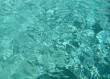 Water is one of the most abundant substance on the surface of the earth. It is the major constituent of almost all life forms and covers about three fourths of the surface of the earth (that's around 70 percent of the earth's surface covered with water - the oceans). Water makes up about 50 - 95 percent of the weight of all living organisms. This means, every living organism needs water to survive, and every living thing is made of at least some amount of water. Thus, without water, there would be no life here on earth or to continue life if it was to become absent. Water in its pure form is a transparent, odorless, tasteless and a neutral substance having a pH of 7 since it is neither acidic or basic. It is also ubiquitous since it can be found dissolved in other substances and the constituent make up of an organism. Water is called the "universal solvent" Water is one of the most abundant substance on the surface of the earth. It is the major constituent of almost all life forms and covers about three fourths of the surface of the earth (that's around 70 percent of the earth's surface covered with water - the oceans). Water makes up about 50 - 95 percent of the weight of all living organisms. This means, every living organism needs water to survive, and every living thing is made of at least some amount of water. Thus, without water, there would be no life here on earth or to continue life if it was to become absent. Water in its pure form is a transparent, odorless, tasteless and a neutral substance having a pH of 7 since it is neither acidic or basic. It is also ubiquitous since it can be found dissolved in other substances and the constituent make up of an organism. Water is called the "universal solvent" because it dissolves more substances than any other liquid. For example, it is found dissolved in substances such as the soil (containing dissolved minerals), blood and tissue of animals and in plants and their fruit. Apart from needing it to cook our food, have a bath, wash, we need it to regulate and carry out chemical reactions in living things as well as our environment. It is a solvent, a solute, a reactant and a biomolecule. Water is also found in the atmosphere as gas (water vapor) and comes down to the surface of the earth as rain, hail, dew and snow. Water is good but it can be just as harmful. Having no water can cause drought which can lead to famines also having too much water at one given time in our environment can lead to flooding and soil erosion causing death and diseases. because it dissolves more substances than any other liquid. For example, it is found dissolved in substances such as the soil (containing dissolved minerals), blood and tissue of animals and in plants and their fruit. Apart from needing it to cook our food, have a bath, wash, we need it to regulate and carry out chemical reactions in living things as well as our environment. It is a solvent, a solute, a reactant and a biomolecule. Water is also found in the atmosphere as gas (water vapor) and comes down to the surface of the earth as rain, hail, dew and snow. Water is good but it can be just as harmful. Having no water can cause drought which can lead to famines also having too much water at one given time in our environment can lead to flooding and soil erosion causing death and diseases.
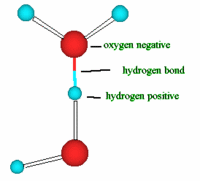
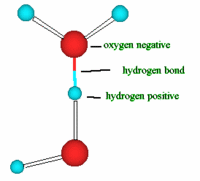 Water has a very simple atomic structure. This structure consists of two hydrogen atoms bonded (attached) to one oxygen atom having the formula H2O. It is the second most common molecule in the Universe after hydrogen (H2). It is the only natural substance that is found as a solid (ice), a liquid and a gas (water vapor) on Earth. Because of this simple composition and structure this gives water very unique physical and chemical properties. This article will not get into detail about forces of attraction between the water (H2O) and its atom but it is important to know that the bonding (attachment) between the hydrogen atom and oxygen atom to form water ( H2O) is called a covalent bonding that is, two hydrogen atoms are joined to a single oxygen atom by single covalent bonds and the Water has a very simple atomic structure. This structure consists of two hydrogen atoms bonded (attached) to one oxygen atom having the formula H2O. It is the second most common molecule in the Universe after hydrogen (H2). It is the only natural substance that is found as a solid (ice), a liquid and a gas (water vapor) on Earth. Because of this simple composition and structure this gives water very unique physical and chemical properties. This article will not get into detail about forces of attraction between the water (H2O) and its atom but it is important to know that the bonding (attachment) between the hydrogen atom and oxygen atom to form water ( H2O) is called a covalent bonding that is, two hydrogen atoms are joined to a single oxygen atom by single covalent bonds and the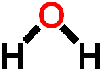 bonding of a hydrogen atom of a water molecule (H2O) to another oxygen atom of a water molecule is called a hydrogen bonding. This bonding takes place because Oxygen is slightly negative and the hydrogen is slightly positive so, the polarity of water molecules results in hydrogen bonding. Thus, this weak attraction is called a hydrogen bond. Hence every water molecule is hydrogen bonded to its four nearest neighbors. bonding of a hydrogen atom of a water molecule (H2O) to another oxygen atom of a water molecule is called a hydrogen bonding. This bonding takes place because Oxygen is slightly negative and the hydrogen is slightly positive so, the polarity of water molecules results in hydrogen bonding. Thus, this weak attraction is called a hydrogen bond. Hence every water molecule is hydrogen bonded to its four nearest neighbors.
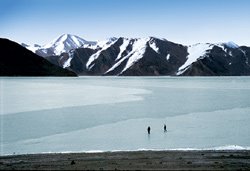
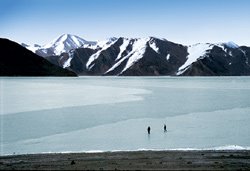 During winter some of us based on our geographical location might have noticed a pond or a lake changing in appearance over time from a liquid state on its surface to a solid hard substance called ice. What causes this? Well, as the temperature of water decreases during this time, water becomes more dense. However, when it reaches a temperatures below 4°C, a very unusual thing happens where water begins to expand. This means, the density of water reaches a temperature of 4 degrees below and going below this temperature, the density of water decreases. Above 4 °C it behaves like other liquids; it expands as it warms and contracts when it cools. Water starts to freeze when the temperature approaches 0°C and the molecules no longer move vigorously enough to break their hydrogen bonds. This unusual property of water is what allows ice to float. Because water freezes below 4 degrees C, i.e. at 0 degrees C, ice is less dense than water. The reason for this strange phenomena is that at 4 degrees C, water molecules are packed as tight as they can be and any attempt to push them closer by lowering the temperature, only makes the water molecules repel each other stronger. Water molecules at the freezing point form a crystal lattice structure, (e.g. ice and snow) that is significantly much less dense that liquid water. This means the density of ice is almost ten times lighter than liquid water. This strange property of water is due to the hydrogen bonding in its structure. During winter some of us based on our geographical location might have noticed a pond or a lake changing in appearance over time from a liquid state on its surface to a solid hard substance called ice. What causes this? Well, as the temperature of water decreases during this time, water becomes more dense. However, when it reaches a temperatures below 4°C, a very unusual thing happens where water begins to expand. This means, the density of water reaches a temperature of 4 degrees below and going below this temperature, the density of water decreases. Above 4 °C it behaves like other liquids; it expands as it warms and contracts when it cools. Water starts to freeze when the temperature approaches 0°C and the molecules no longer move vigorously enough to break their hydrogen bonds. This unusual property of water is what allows ice to float. Because water freezes below 4 degrees C, i.e. at 0 degrees C, ice is less dense than water. The reason for this strange phenomena is that at 4 degrees C, water molecules are packed as tight as they can be and any attempt to push them closer by lowering the temperature, only makes the water molecules repel each other stronger. Water molecules at the freezing point form a crystal lattice structure, (e.g. ice and snow) that is significantly much less dense that liquid water. This means the density of ice is almost ten times lighter than liquid water. This strange property of water is due to the hydrogen bonding in its structure.
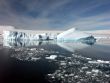 So, when the surface temperature in a lake or pond reaches 0°C, ice forms and floats on top of the its surface. This ice becomes an insulating layer on the surface by reducing the heat loss from the water below and thus, enabling life to continue in the lake or pond. When ice absorbs enough heat for its temperature to increase above 0°C, the hydrogen bonds can be broken allowing the water molecules to slip closer together (melting). If this strange phenomena did not take place when water turns into ice, then ice would sink to the bottom of lakes and ponds where the marine life would be killed from the ice since it would be formed from the bottom. Also, the ice would not be able to thaw out, since the energy from the air and the sunlight would not be able to penetrate through thick dark layers of ice way below the depth of the pond or lake. So ice being less dense than water will form and float at the surface. So, when the surface temperature in a lake or pond reaches 0°C, ice forms and floats on top of the its surface. This ice becomes an insulating layer on the surface by reducing the heat loss from the water below and thus, enabling life to continue in the lake or pond. When ice absorbs enough heat for its temperature to increase above 0°C, the hydrogen bonds can be broken allowing the water molecules to slip closer together (melting). If this strange phenomena did not take place when water turns into ice, then ice would sink to the bottom of lakes and ponds where the marine life would be killed from the ice since it would be formed from the bottom. Also, the ice would not be able to thaw out, since the energy from the air and the sunlight would not be able to penetrate through thick dark layers of ice way below the depth of the pond or lake. So ice being less dense than water will form and float at the surface.
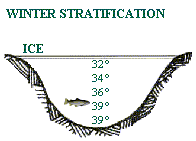
 32° F (0° C) - 39° F (4° C) 32° F (0° C) - 39° F (4° C)
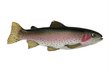
Therefore, during this season, water in lakes and ponds produce layers of water called strata. This means you will have different temperature levels of water as you move from the top to the bottom of a pond or lake. The top will be much colder so fish, which are cold-blooded, will move to the bottom of ponds or lakes when the water gets too cold, and their metabolism slows down dramatically. Thus using up less energy, which they will need for their survival.
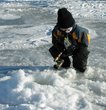 So , if it had always been your dream or your hobby to do ice fishing by carving a hole and standing on an ice-covered lake or pond to catch fish, you will now know how it all get started for you to be pulling up a fish from that dark mysterious depths below. So , if it had always been your dream or your hobby to do ice fishing by carving a hole and standing on an ice-covered lake or pond to catch fish, you will now know how it all get started for you to be pulling up a fish from that dark mysterious depths below.
Did You know also:
- If a heavy amount of snow accumulates on the ice, the amount of light penetrating through the ice will be reduced. This will result in less light reaching aquatic plants below the ice which is needed to carry out photosynthesis thus, causing the plant to die and be broken down by bacteria. These bacteria (called aerobic bacteria) will then use up the oxygen and cause a drastic drop in dissolved Oxygen in the water. When this winter oxygen depletion occurs, marine life such as fish that depends on oxygen will die. As fish and other marine life die, their bodies decompose and use up even more oxygen, and the depletion of oxygen gets even worse. This is called Winterkill. Drought also can cause a similar fate by reducing the volume of water in the lake. This means with the less water content present the less there will be a oxygen rich environment to support life.
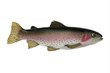 Unlike in freshwater, like lakes and ponds, the presence of salt in the water allows it to get much colder than freshwater before it freezes. Therefore, Arctic and Antarctic fish have developed an antifreeze (proteins) molecules that bind to tiny ice crystals in their blood thus preventing the ice crystals from getting bigger and causing serious cell damage that can lead to death. Unlike in freshwater, like lakes and ponds, the presence of salt in the water allows it to get much colder than freshwater before it freezes. Therefore, Arctic and Antarctic fish have developed an antifreeze (proteins) molecules that bind to tiny ice crystals in their blood thus preventing the ice crystals from getting bigger and causing serious cell damage that can lead to death.
- Water is always in a never-ending recycle thus the same amount of water that was around when the earth was formed is approximately the same amount today.
Conclusion
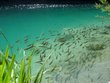 Hence, bodies of water (such as lakes and ponds) freeze from the top down where marine life can be sustained under the ice. If ice did not form on the top of water then polar ice caps would almost not exist since the ice would form from the bottom upward and would take a very long time to reach the surface, if it ever does. Likewise, the world would be a different place if that was so, there would be no: marine life, ice fishing, ice skating, no polar bear, the Antarctic continent would be smaller in size and the list goes on! Hence, bodies of water (such as lakes and ponds) freeze from the top down where marine life can be sustained under the ice. If ice did not form on the top of water then polar ice caps would almost not exist since the ice would form from the bottom upward and would take a very long time to reach the surface, if it ever does. Likewise, the world would be a different place if that was so, there would be no: marine life, ice fishing, ice skating, no polar bear, the Antarctic continent would be smaller in size and the list goes on!
Related Article:
How Do Fish Breathe?
|
|
Message Board
FeedBack Appreciated
Please spare some time to give your feedback about this site. Thanks in advance.
|
|
|
|
Message from the Author
 R. Edmondson
United States
R. Edmondson
United States
Did You Know site is used as a learning tool to provide a stimulating learning environment for general knowledge development; to promote increased diversity on the online learning community and to incorporate the site’s informative quality content with the best of online communication platform (blog) in making knowledge accessible and free to all.
Thanks for the support.
|
|
|
|
|


 The end of another year is here again. All around the world there will be celebrations with parties, parades and fireworks to send out the old year with a bang while bringing in the New Year. We all have to give thanks for making it through another year. This is the time that we should reflect on things that made us happy throughtout the year and other things that didn't quite go the the way we had
 planned it to be. However, we can learn from these past experiences whether they be bad or good to make the New Year even better. Recently I wrote an article on How to say Merry Christmas in Different Languages and was asked by some readers to do one on How to say Happy New Year in different languages. So, this has delayed me a little
  since I had to change my article theme for this week. The list below are listed
 according to language rather than the list of countries where the language is being spoken. The list below might not be a comprehensive one however, it will be updated when there are additions. Also, there is a Year In Review Section where you can read or reread some past interesting articles that I picked randomly. It is possible that you might have not read any of these articles depending on when you became a reader, visitor, stalker or how far you went into my archives. Now, while you are having fun and preparing to ring in the New Year with friends and love ones here is a list of greetings of how to say Happy New Year in different languages around the world.



 Not all countries around the world celebrate New Year at the same time due to their time zones. Likewise neither do they celebrate this holiday the same way due to their culture and beliefs. Also, some people around around the world use different calendars. Some calendars in use today are Chinese calendar, Christian calendar, Indian calendar, The Islamic calendar (or Hijri calendar),
 The Jewish calendar (official calendar of Israel), Ethiopian calendar ( based on the Coptic calendar), Persian calendar (a solar calendar), Hindu Çaka and Pawukon calendar used by the Balinese and so on.
 Here are some past articles for 2005 that you should find interesting. You can check the archive for other interesting articles that shaped the success and purpose of this blog in 2005. This is( and soon was) the year this site came into existence. A very special year for Universal Facts (Did You Know?). Thanks to all readers and visitors that help to fulfill the aim and purpose of this site.